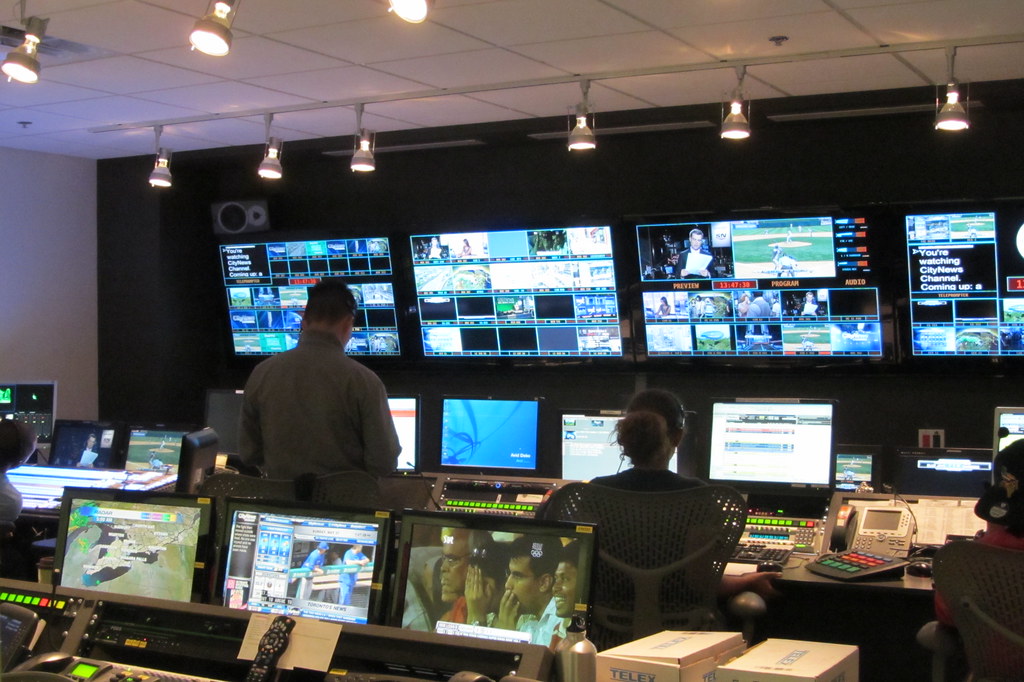
Illustrative photo: a broadcast control room driving a wall of screens. Photo by Loozrboy, CC BY-SA 2.0, via Flickr
The short answer
P3.91 is the touring workhorse: cheaper per square meter, lighter rigging loads, and “good enough” resolution for concerts, festivals and corporate stages viewed from 4+ meters. P2.6 earns its premium where the camera or the front row gets close: broadcast studios, xR virtual production, auto shows and high-end corporate events. Most large rental houses stock both; the mix depends on their client base.
Head to head
| P2.6 | P3.91 | |
|---|---|---|
| Pixel pitch | 2.6 mm (typically 2.604 mm) | 3.91 mm (typically 3.906 mm) |
| Typical viewing distance | 2.5 m and up | 4 m and up |
| Resolution per 500 × 500 cabinet | 192 × 192 px | 128 × 128 px |
| Best for | Broadcast, xR/virtual production, auto shows, premium corporate | Concerts, festivals, touring, corporate staging |
| Refresh rate (typical) | 3,840 to 7,680 Hz | 3,840 Hz (some 7,680 Hz) |
| Relative cost | Higher per ㎡ (more LEDs, tighter tolerances) | Lower per ㎡ (the volume pitch) |
| Weight class (500 × 500) | Mostly 7.5 to 9.5 kg | Mostly 7.5 to 8.7 kg |
| Products in our database | 10 cabinets | 7 cabinets |
Figures are typical ranges across the products in our database (verified 2026-09-26), not a single product’s spec. How we normalize specs
What actually decides it
- Closest viewer distance. The rule of thumb: minimum viewing distance in meters ≈ pitch in mm. P2.6 stays clean from ~2.6 m; P3.91 from ~3.9 m.
- Cameras. Broadcast and virtual production punish low refresh rates and coarse pitch. The P2.6 field is full of 7,680 Hz options (Absen Saturn, ROE Topaz, AOTO DL); several P3.91 cabinets also reach 7,680 Hz now.
- Rigging math. At the 500 × 500 mm standard, both pitches land in the 7 to 9 kg band, so the decision is rarely about weight. It’s about LED count per wall and budget.
- Inventory compatibility. Yes Tech’s MU series, QSTECH’s C-Shine Plus, Unilumin’s URMIII and Leyard’s LN series all span both pitches. Buying both sizes from one platform keeps spares, rigging and processing common.